
More Indian families are switching from kadhais to air fryers, and the shift is happening quickly. The Indian small kitchen appliances market was valued at approximately USD 1,735.8 million in 2024, with air fryers among the fastest-growing product categories.
The reason is straightforward. Indian cooking has always relied on oil. Pakoras, samosas, murukku, paneer tikka. These are not optional dishes. They are what the kitchen is built around. The problem with deep frying them is not just extra calories. Repeated heating of oil at high temperatures produces compounds like acrylamide and harmful free radicals. Over time, this affects cardiovascular health and digestion. An air fryer changes the equation without asking you to change what you eat. You get the crunch, flavour, colour, but you skip most of the oil.
For families who cook daily, or for anyone who wants to eat a little better without giving up their favourite foods, an air fryer is a practical upgrade. Here is a detailed breakdown of what it actually delivers for Indian cooking, along with tips for getting the most out of it.
Air Fryer Health Benefits
Multiple studies indicate the uses and benefits of air fryers, such as:
- Less oil per meal: Air frying uses up to 80% less oil than deep frying, significantly reducing the total fat content of your food.[1]
- Fewer calories: A 2015 study published in Food Chemistry confirmed that air-fried potato slices absorbed significantly less fat than their deep-fried equivalents.[2]
- Lower acrylamide levels: Deep frying starchy foods at high temperatures produces acrylamide. Air frying produces 90% lower acrylamide levels compared to deep frying.[3]
- Better for heart health: The American Heart Association recommends reducing saturated fat intake for cardiovascular health.[4] Cooking with less oil daily is a direct step in that direction.
Top 10 Air Fryer Benefits for Everyday Cooking
1. Cuts Oil Use by Up to 80%
A standard batch of samosas or aloo tikkis takes about half a teaspoon of oil spray in an air fryer. The same batch in a kadhai absorbs several tablespoons. Over a month of daily cooking, that adds up.
2. Preheats in Under 3 Minutes
A conventional OTG oven takes 10 to 15 minutes to preheat. An air fryer is ready in 2 to 3 minutes. For quick weeknight meals or after-school snacks, that time gap matters every single day.
3. Cleans Up in Minutes
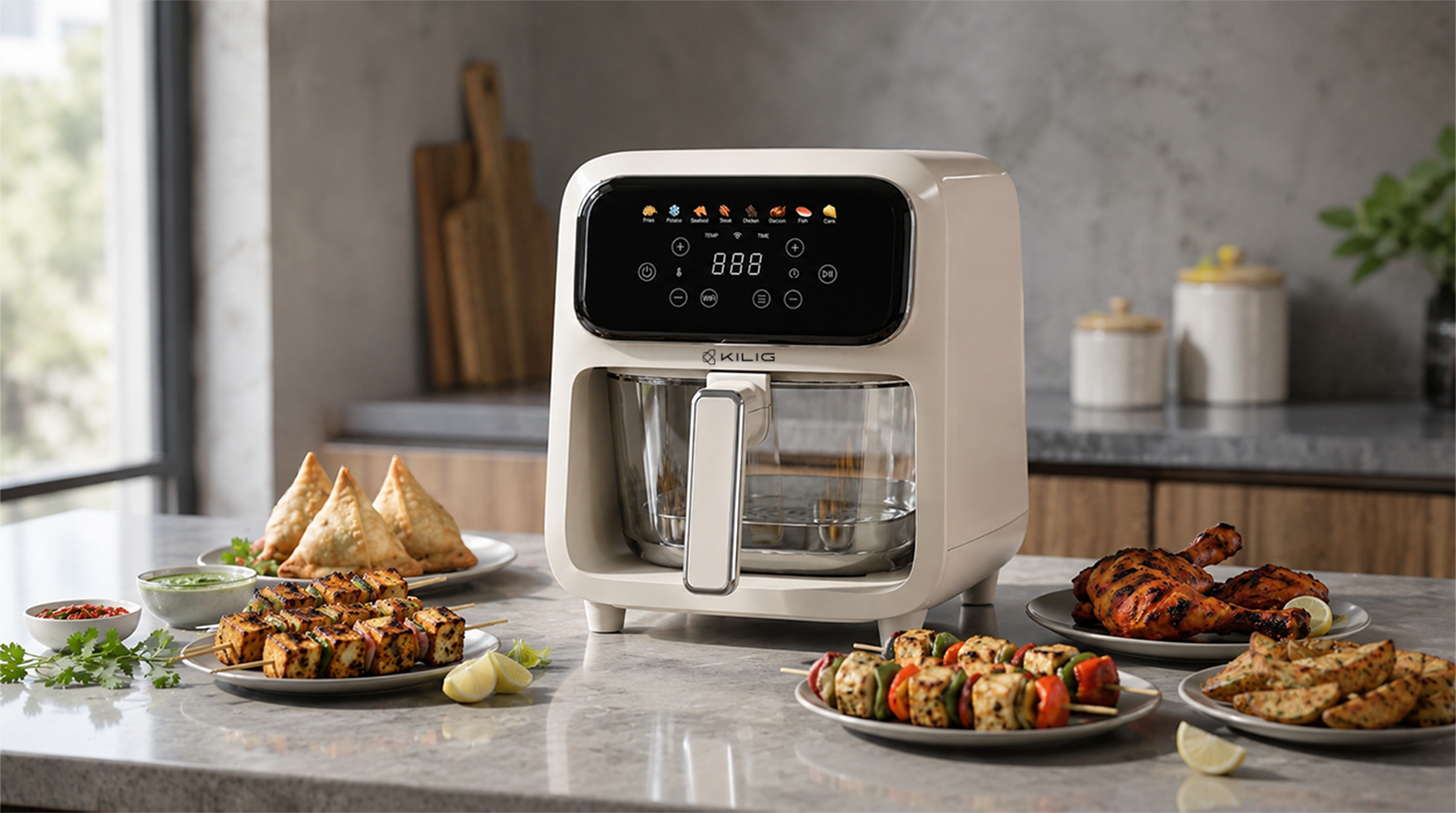
No more scrubbing burnt oil off a heavy kadhai. Air fryer baskets wipe clean easily. Toxin-free glass basket models, such as the Kilig Nexa Core, are fully dishwasher-safe.
4. Guilt-Free Festive Snacks
Indian snacks like chakli, mathri, namak para, and ribbon pakoda come out crisp without any recipe modification. You don't change the recipe. You only change how you cook it.
5. Consistent Results Every Time
The temperature-controlled cooking chamber removes the guesswork of watching food in hot oil. Set the temperature and timer, and the machine does the rest.
6. Safer for Families
Hot oil splatter is one of the leading causes of kitchen burns. An air fryer keeps everything inside a closed chamber, so there is no splattering of oil and far less risk of accidental burns, especially for young children nearby.
7. Works Across the Full Range of Indian Recipes
Tandoori chicken, paneer tikka, fish fry, seekh kebabs, dry-roasted makhana, baked goods. An air fryer handles a wider variety of Indian dishes than most people expect when they first buy one.
8. Replaces Multiple Kitchen Appliances
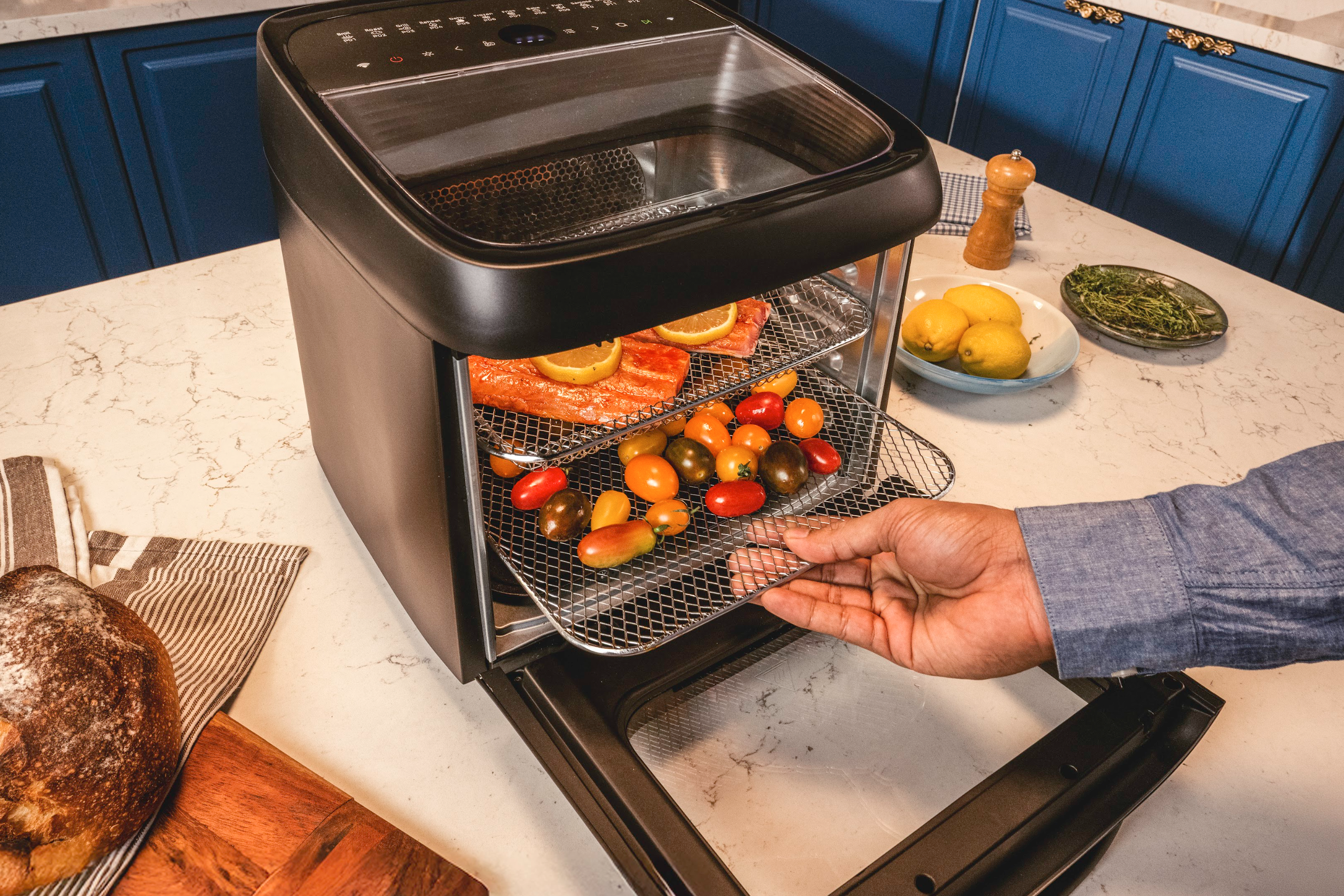
Modern 6-in-1 models can air fry, bake, grill, roast, dehydrate, and rotisserie. The Kilig Nexa Edge 12L replaces a standard OTG, a tandoor-style grill, and a food dehydrator in one appliance.
9. More Energy-Efficient Than an OTG Oven
An 1800W air fryer running for 15 minutes draws significantly less total energy than a full-size OTG oven, which needs more time to preheat and sustain heat through its larger chamber. For households cooking two to three times daily, the difference shows up on the electricity bill.
10. Compact Enough for Any Indian Kitchen Counter
Even 12-litre oven-style air fryers take up roughly the same counter space as a standard microwave oven. Most 4-litre basket models are more compact than a rice cooker.
Air Fryer Uses in Indian Cooking
An air fryer is highly versatile in an Indian kitchen. It acts as a mini convection oven that cooks flavourfully, along with cutting oil. You can prepare:
Snacks
Samosas, bread pakoras, vada pav patties, murukku, and spring rolls all cook well in an air fryer. The hot circulating air crisps the outer layer without soaking the filling in oil.
Main Course
Tandoori chicken, seekh kebabs, fish fry, grilled vegetables, and paneer tikka are best cooked at 180 to 200°C. The high heat handles Indian spiced marinades without burning them.
Breakfast
Bread toast, akki roti, poha cutlets, and leftover roti chips crisp up cleanly in under 5 minutes. No oil. No pan.
Desserts
Muffins, small sponge cakes, gulab jamuns from store-bought mix, and roasted dry fruits all work in an air fryer. The Kilig Nexa Core's dual top-and-bottom 1800W heating delivers even heat across the basket, which is important for baking small batches.
Air Fryer vs Deep Frying vs Oven
Here is how the three methods compare across the factors that matter most for Indian households:
| Factor | Air fryer | Deep frying | Conventional oven |
|---|---|---|---|
| Oil required | 0.5–1 tsp spray | 500 ml to 1 L per batch | 1–2 tbsp |
| Preheat time | 2–3 minutes | 5–10 minutes | 10–15 minutes |
| Acrylamide levels | Very low* | High | Medium |
| Cleaning effort | Easy wipe down. Bowls & grills are dishwasher safe. | Very hard | Medium |
| Versatility | High (bake / grill / roast presets) | Low | High |
| Counter space | Compact | Minimal | Large |
*Air frying produces 90% lower acrylamide levels than deep frying, according to research published in the Journal of Food Science.[2]
5 Expert Tips to Get the Best Results
- Cook in a single layer. Stacking food traps steam and prevents crisping. One layer of food in the basket will always give better results than two crowded layers.
- Preheat for 2 minutes before placing food in. A cold air fryer will cook unevenly in the first minute. A brief preheat removes this problem entirely.
- Lightly brush or spray food with oil. It is optional, but a thin coat helps Indian-spiced marinades brown and crisp properly, especially for kebabs and tikkas.
- Flip or shake food halfway through cooking. For denser pieces like chicken thighs or thick paneer cubes, flipping at the halfway mark ensures even browning on both sides.
- Lower the temperature by 15°–20°C when converting OTG recipes. Air fryers circulate heat more aggressively than standard ovens, so they run a little hotter in practice. This small adjustment prevents overcooking.
Choosing the Right Air Fryer for Your Home
The right model depends on how many people you cook for and what you cook regularly.
For singles, couples, or bachelors
The Kilig Nexa Core 4L has a 100% toxin-free borosilicate glass basket with zero PTFE, PFAS, or PFOA coatings, dual 1800W top-and-bottom heating, and exclusive StepChef™ technology that lets you remotely start, schedule, and monitor your meals from your smartphone via the MyKilig app.
For families of 4 to 6
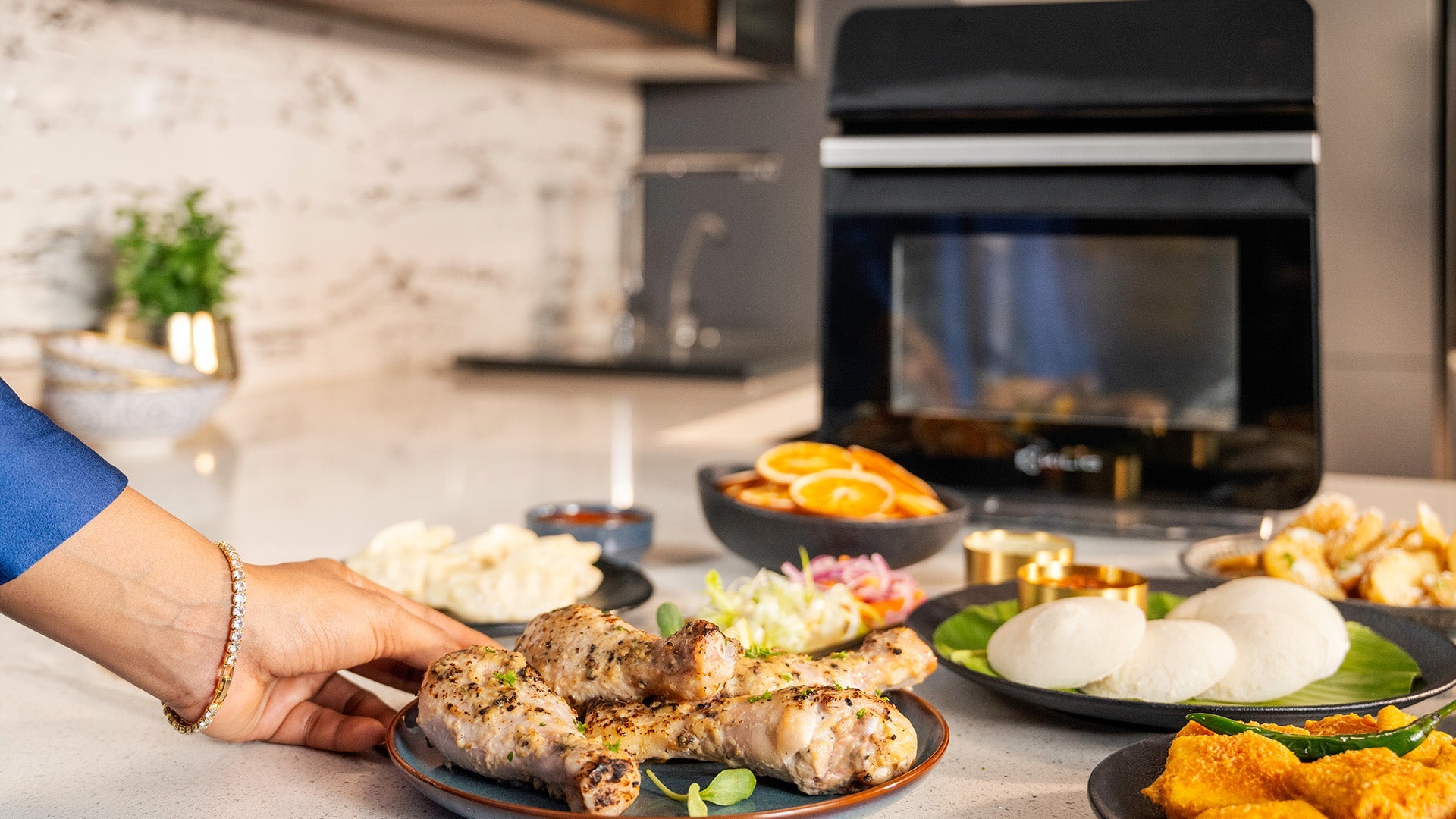
The Kilig Nexa Edge 12L offers 6-in-1 cooking, a rotisserie function, a dual viewing window, and a toxin-free galvanized steel interior with no coatings of any kind.
For health-focused families
The Kilig Nexa SteamX 10.5L combines steam and air fry in one appliance, retaining moisture in food while still giving a crispy, golden finish.
For compact kitchens with simpler needs
The Kilig Iris Plus is a straightforward, space-efficient model designed for everyday air frying without the premium features.
All models come with a 2-year warranty and are available on our website www.mykilig.com.
FAQs
Can air fryers replace deep frying completely?
For most Indian snacks and grilled dishes, yes. An air fryer delivers a comparable crunch for samosas, pakoras, and kebabs. Some things don't translate well. Puris and bhature need to puff inside hot oil, so they stay in the kadhai. But for 80 to 90% of everyday fried snacks and grilled dishes, an air fryer is a direct and practical replacement.
How does an air fryer help in healthy cooking?
It cuts oil use by up to 80% compared to deep frying, reduces the formation of acrylamide and other harmful compounds from high-temperature oil frying, and lets you control exact cooking temperatures. When paired with a genuinely toxin-free surface like borosilicate glass, you also remove any risk of chemical leaching from non-stick coatings into your food during cooking.
Is an air fryer actually healthy?
Yes.[1] Just two things are worth checking before buying. First, the coating on the basket matters. Many budget air fryers use PTFE-based non-stick coatings. At temperatures above 260°C, PTFE starts to degrade and can release toxic fumes. In November 2023, the IARC classified PFOA, the chemical used to manufacture PTFE coatings, as a Group 1 carcinogen, placing it in the same category as tobacco and asbestos in terms of cancer evidence. Second, an air fryer reduces fat in cooking but does not make every dish nutritionally complete. Used as part of balanced daily meals, it is a genuinely healthier cooking method than deep frying.
Share this product
WhatsApp Facebook X (Twitter) TelegramHow to Use an Air Fryer – Beginner's Guide & Tips
How to Cook French Fries in an Air Fryer?